COOPERATIVE AGREEMENT IN TANKER VOYAGE CHARTER
PLACE: HAINAN,CHINA DATE:31/Mar./2026
This strategic cooperation agreement was reached today with validity period of this agreement from Mar. 2026 to Mar.2027 between Zhong Gang Hua Tai (HK) Limited (hereinafter referred to as “Ship Owner”) and Eston(Ha
inan) Industrial Co., Ltd. (hereinafter referred to as “Charterer”).In the formal signing ofthe partial transportation charter agreement with the Buyer, the charterer shall designate the buyer’s authorized signer to agree to the transportation conditions stipulated in this Agreement which
shall be conducted in accordance with the terms and conditions of this Agreement including Part I and Part II. In the event of a conflict in the provisions, Part I will be superior to those contained in Part II.
PART I
Tanker Particulars ( Q88)
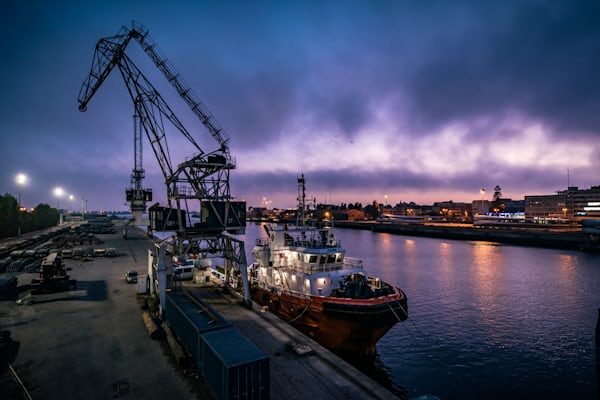
Tanker Name:Seaways Luzon (IMO number: 9301940) MMSI:538002946
Deadweight :Summer:74,908 . 89MT;Winter:71 ,901.40 MT;Tropical:76, 716.00 MT Note : Tanker DW T Max 100,000MT
Overall Length(M):228.00m
Registered LxBxD (M) :219.00M x32.
24M x 20.65M Call Sign :V7NE5 Flag:Marshall Islands / Majuro
Max Draft oftanker in Summer/Winter:14 .32 m/14 .02m
Note: As particulars ofeach tanker may vary,they are not described here.The contents recorded in the single voyage charter party shall prevail.
Shipping Condition
1、Shipper: ZHONG GANG HUA TAI (HK) LIMITED
Address: Room 401, 4th Floor, Wan Chai Central Building, 89 Lockhart Road, Wan Chai,
Hong Kong
2 、Loading Port(s) :a safe port determined by the Charterer.
3 、Discharging Port(s):HAINAN,ZHANGJIANG,NING BO,ZHOU SHAN,QINGDAO, DALIAN,PORT and other safe ports,and/or ports neighboring countries of China.Charterer’ s option and risks.
4、Cargo:FUELOIL/EN590,Charterer’s Option(density no less than 0.9),Non-sanctions-related Cargos and her owner.
5 、Tentatively 3 tankers to be chartered,transporting Fuel Oil or diesel EN 590-10 PPM,each batch not less than 50,000 metric tons,then gradually increase the number of chartered tankers for extensive shipments.
6 、Freight rate USD$or RMB to be confirmed per freight ton(MT/M3)in period from March to June 2026,later freight rate will be appropriately adjusted as per the shipping market condition.
7 、Total Lay time 48 in Running Hours WWD(weather working day)Saturday,Sunday and Holiday included.
Demurrage per day:USD/RMB to be confirmed /PDPH
8 、Freight Payment:Freight payable in China.the Charterer shall pay the full freight amount in RMB to the account designated by the Owner within 7 days after the charter party signed by the Charterer and the Owner and before the tanker proceeds to the loading port.All port charges, including the ports of loading and unloading,shall be borne by the charterer.
9 、The place of General Arbitration is in Hainan China.
10 、Within 7 days after the signing of this Agreement,the charterer shall pay the total sea freight to the account designated by the owner,otherwise it will be deemed as a default by the charterer,the Shipowner thus claims for compensation.
11 、If no cargo prepared or no berth scheduled when the tanker arrived the loading port,the contract may be revoked but the freight charges collected will be deemed as compensation for the loss of the owner and not be returned to the Charterer.
12 、Full Demurrage shall be paid by the Charterer to the shipowner’s designated account every day but always shall be paid before discharging at discharging port.
13 、NOR: Regardless of the loading and unloading weather and berth and others conditions, the NOR shall be deemed to be received by the Charterer within 8 hours after the vessel arrives at the outer anchorage and submits the NOR. NOR IN WIBON/WCCON/WIFPON/WIPON/WIJION
14 、Besides the original copy of the documents, scanned CPA copy signed and stamped by both parties sent via email, WeChat or fax to be equivalent to the original copy.
15、The above content constitutes the general terms of the cooperation agreement. For each batch of goods and each tanker, the two parties need to sign a CHARTER PARTY to stipulate the details.
IN WITNESS WERE OFF, the parties have caused this Charter, consistiong ofa Preamble, Parts Iand II,to be executed in duplicate as of the day and yeat first above written
SIGNATURE:
OWNER:ZHONG GANG HUA TAI (HK) LIMITED
EMAIL :Vessel@huaitai.ca DATE:March 31, 2026
SIGNED BY the legal representative of the company or her/his authorized representative: SIGNATURE AND STAMPLE
CHARTERER:ESTON(HAINAN)INDUSTRIAL CO.,LTD. EMAIL:772509011@qq.com
DATE: March 31, 2026
SIGNED BY the legal representative of the company or her authorized representative
:
SIGNATURE AND STAMPLE


The following second part primarily consists of the content of the Gencon version of the charter party. Due to variations in cargo, loading and discharging ports, voyage routes, and geopolitical factors for each voyage, the specific terms of the charter party may differ. Therefore, it is recommended that the charterer and the shipowner negotiate and sign the charter party after determining the voyage task.
PART II
1. WARRANTY—VOYAGE—CARGO.
The vessel, classed as specified in Part I hereof, and to be so maintained during the currency of this Charter, shall, with all convenient dispatch, proceed as ordered to Loading Port(s) named in accordance with Clause 4 hereof, or so near thereunto as she may safely get (always afloat) , and being seaworthy, and having all pipes, pumps and heater coils in good working order, and being in every respect fitted for the voyage, so far as the foregoing conditions can be attained by the exercise of due diligence, perils of the sea and any other cause of whatsoever kind beyond the Owner’s and/or Master’s control excepted, shall load (always afloat) from the factors of the Charterer a full and complete cargo of petroleum and/or its products in bulk, not exceeding what she can reasonably stow and carry over and above her bunker fuel, consumable stores, boiler feed, culinary and drinking water, and complement and their effects (sufficient space to be left in the tanks to provide for the expansion of the cargo), and being so loaded shall forthwith proceed, as ordered on signing Bills of Lading, direct to the Discharging Port(s) , or so near thereunto as she may safely get (always afloat), and deliver said cargo.
Freight shall be at the rate stipulated in Part I and shall be computed on intake quantity (except dead freight as per Clause 3) as shown on the Inspector’s Certificate of Inspection. Payment of freight shall be made by Charterer without upon delivery of cargo at destination, less any disbursements or advances made to the Master or Owner ’s agents at ports of loading and/or discharge and cost of insurance thereon. No deduction of freight shall be made for water and/or sediment contained in the cargo. The services of the Petroleum Inspector shall be arranged and paid for by the Charterer who shall furnish the Owner with a copy of the Inspector’s Certificate.
DEAD FREIGHT
Should the Charterer fail to supply a full cargo, the Vessel may, at the Master’s option, and shall, upon request of the Charterer, proceed on her voyage, provided that the tanks in which cargo is loaded are sufficiently filled to put her in seaworthy condition. In that event, however, dead freight shall be paid at the rate specified in Part I hereof on the difference between the intake quantity and the quantity the Vessel would have carried If loaded to her minimum permissible free board for the voyage
NAMING LOADING AND DISCHARGE PORTS.
(a) The Charterer shall name the loading port or ports at least twenty-four (24) hours prior to the Vessel ’s readiness to sail from the last previous port of discharge, or from bunkering port for the voyage, or upon signing this Charter if the Vessel has already sailed. However, Charterer shall have the option of ordering the Vessel to the following destinations for wireless orders
(c) Any extra expense incurred in connection with any change in loading or discharging ports (so named) shall be paid for by the Charterer and any time thereby lost to the Vessel shall count as used lay time.
LAY DAYS.
Lay time shall commence before the date stipulated In Part I. If the Vessel can not be ready to load by 4:00 o ’clock P.M . ( local time) on the canceling date stipulated in Part I, the Charterer shall not cancel this Charter and this Charter to remain in full force and effect.
NOTICE OF READINESS
Upon arrival at customary anchorage at each port of loading or discharge, the Master or his agent shall give the Charterer or his agent notice by letter, telegraph, wireless or telephone that the Vessel it ready to load or discharge cargo, berth or no berth, and lay time, as hereinafter provided, shall commence upon the
expiration of six (6) hours after receipt of such notice, or upon the Vessel’s arrival in berth (i.e ., finished
mooring when at a sea loading or discharging terminal and all fast when loading or discharging alongside a wharf), whichever first occurs. Whats ever delay is caused to Vessel getting into berth after giving notice of readiness for any reason over which Charterer has no control, such delay shall count as used lay time.NOR IN WIBON/WCCON/WIFPON/WIPON/ WIJION.
HOURS FOR LOADING AND DISCHARGING.
The number of running hours specified as laytime in Part I shall be permitted the Charterer as laytime for loading and discharging cargo; if any delay due to the Vessel’s condition or breakdown or inability of the Vessel’s facilities to load or discharge cargo in port within the time allowed shall count as used laytime. If regulations of the Owner or port authorities prohibit loading or discharging of the cargo at night, time so lost shall not count as used laytime; if the Charterer, shipper or consignee prohibits loading or discharging at night, time so lost shall count as used laytime. Time consumed by the vessel in moving from loading or discharge port anchorage to her loading or discharge berth, will count as used laytime, but discharging ballast water or slops in no loading and unloading times, will not count as used laytime.
7 .
On a voyage to a port or ports in:
ST. KITTS Carribbean or U.S. Gulf loading port(s)
PORT SAID Eastern Mediterranean or Persian Gulf loading port(s)(from ports west ofPort Said.)
(b) If lawful and consistent with Part I and with the Bills of Lading, the Charterer shall have the option of nominating a discharging port or ports by radio to the Master on or before the Vessel’s arrival at or off the following places
Place On a voyage to a port or ports in:
LAND’S END
SUEZ GIBRALTER
United Kingdom/Continent (Bordeaux/Hamburg range) or Scandinavia (including Denmark)
Mediterranean (from Persian Gulf) Mediterranean (from Western Hemisphere).
Charterer shall pay demurrage per running hour and pro rata for a part thereof at the rate specified in Part I for all time that loading and discharging and used laytime as elsewhere herein provided exceeds
the allowed laytime elsewhere herein specified.
Demurrage shall be counted base on NOR IN WIBON/WCCON/WIFPON/WIPON/WIJION.
SAFE BERTHING—SHIFTING.
The vessel shall load and discharge at any safe place or wharf, or alongside vessels or lighters reachable on her arrival, which shall be designated and procured by the Charterer, provided the Vessel can proceed thereto, lie at, and depart therefrom always safely afloat, any lighterage being at the expense, risk and peril of the Charterer. The Charterer shall have the right of shifting the Vessel at ports of loading and/or discharge
from one safe berth to another on payment of all towage and pilotage shifting to next berth, charges for
running lines on arrival at and leaving that berth, additional agency charges and expense, customs overtime
and fees, and any other extra port charges or port expenses incurred by reason of using more than one berth. Time consumed on account of shifting shall count as used laytime.
10. PUMPING IN AND OUT.
The cargo shall be pumped into and out of the Vessel at the expense, risk and peril of the Charterer, and at the risk and peril of the Charterer, where delivery of the cargo shall be taken by the Charterer or its consignee. If required by Charterer, Vessel after discharging is to clear shore pipe lines of cargo by pumping water through them and time consumed for this purpose shall apply against allowed laytime. The Vessel shall supply her pumps and the necessary power for discharging in all ports, as well as necessary hands. However, should the Vessel be prevented from supplying such power by reason of regulations prohibiting fires on board, the Charterer or consignee shall supply, at its expense, all power necessary for discharging as well as loading, the Charterer shall pay for power supplied to the Vessel for other purposes. If cargo is loaded from lighters, the Vessel shall furnish steam at Charterer’s expense for pumping cargo into the Vessel, if requested by the Charterer, providing the Vessel has facilities for generating steam
and is permitted to have fires on board. All overtime of officers and crew incurred in loading and/ or discharging shall be for account of the Vessel.
1 1 . HOSES: MOORING AT SEA TERMINALS
Hoses for loading and discharging shall be furnished by the Charterer and shall be connected and disconnected by the Charterer, or, at the option of the Owner, by the Charterer’s risk and expense. Laytime shall continue until the hoses have been disconnected. When Vessel loads or discharge at a sea terminal, the Vessel shall be properly equipped at Owner’s expense for loading and discharging at such place, including suitable ground tackle, mooring lines and equipment for handling submarine hoses.
12. DUES—TAXES—WHARFAGE.
The Charterer shall pay all taxes, dues and other charges on the cargo, including but not limited to Customs overtime on the cargo, The Charterer shall also pay all taxes on freight at loading or discharging ports and any unusual taxes, assessments and governmental charges which are not presently in effect but which may be imposed in the future on the Vessel or freight. The Owner shall pay all dues and other cargoes on the Vessel (whether or not such dues or charges are assessed on the basis of quantity of cargo), including but not limited other wharf totaxes,. The Vessel shall be free of charges for the use of any wharf, dock, place or mooring facility
arranged by the Charterer for the purpose of loading or discharging cargo; however, the Owner shall be responsible for charges for such berth when used solely for Vessel’s purposes, such as awaiting Owner’s orders, tank cleaning, repairs, etc. before, during or after loading or discharging.
( a ) . CARGOES EXCLUDED V APOR PRESSURE.
Cargo shall not be shipped which has a vapor pressure at one hundred degrees Fahrenheit (100 ° F .) in excess ofthirteen and one-half pounds (13 .5 lbs.) as determined by the current A.S.T.M. Method (Reid) D-323.
(b) . FLASH POINT.
Cargo having a flash point under one hundred and fifteen degrees Fahrenheit (115 ° F.) (closed cup) A. S.T.M. Method D-56 shall not be loaded from lighters but this clause shall not restrict the Charterer from loading or topping off Crude Oil from vessels or barges inside or outside the bar at any port or place where bar
conditions exist.
In case port of loading or discharge should be inaccessible owing to ice, the Vessel shall direct her courseaccording to Master’s judgment, notifying by telegraph or radio, if available, the Charterers, shipper or consignee, who is bound to telegraph or radio orders for another port, which is free from ice and where there are facilities for the loading or reception of the cargo in bulk. The whole of the time occupied from the time the Vessel is diverted by reason of the ice until her arrival at an ice-free port of loading or discharge, as the case may be, shall be paid for by the Charterer at the demurrage rate stipulated in Part I.
TWO OR MORE PORTS COUNTING AS ONE.
To the extent that the freight rate standard of reference specified in Part I F hereof provides for special groupings or combinations of ports or terminals, any two or more ports of terminals within each such grouping or combination shall count as one port for purposes of calculating freight and demurrage only, subject to the following conditions:
(a) Charterer shall pay freight at the highest rate payable under Part I F hereof for a voyage between the loading and discharge ports used by Charterer.
(b) All charges normally incurred by reason of using more than one berth shall be for Charterer’s account as provided in Clause 9 hereof.
(c) Time consumed shifting between the ports or terminals within the particular grouping or combination shall count as used laytime.
16. GENERAL CARGO.
The Charterer shall not be permitted to ship any packaged goods or non-liquid bulk cargo of any description; the cargo the Vessel is to load under this Charter is to consist only of liquid bulk cargo as specified in Clause 1.
17. (a). QUARANT
Should the Charterer send the Vessel to any port or place where a quarantine exists, any delay thereby caused to the Vessel shall count as used laytime; but should the quarantine not be declared until the Vessel is on passage to such port, the Charterer shall not be liable for any resulting delay.
(b) FUMIGATION.
If the Vessel, prior to or after entering upon this Charter, has docked or docks at any wharf which is not rat- free or stegomyia-free, she shall, before proceeding to a rat-free or stegomyia-free wharf, be fumigated by the Owner at his expense, except that if the Charterer ordered the Vessel to an infected wharf the Charterer shall bear the expense of fumigation.
18. CLEANING.
The Owner shall clean the tanks, pipes and pumps of the Vessel to the satisfaction o fthe Charterer’s Inspector. The Vessel shall not be responsible for any admixture if more than one quality of oil is shipped, nor for leakage, contamination or deterioration in quality of the cargo unless the admixture, leakage, contamination or deterioration results from error or fault of the servants of the Owner in the loading, care or discharge of the cargo.
GENERAL EXCEPTIONS CLAUSE.
The Vessel, her Master and Owner shall not, unless otherwise in this Charter expressly provided, be responsible for any loss or damage, or delay or failure in performing hereunder, arising or resulting from:- any act, neglect, default or barratry of the Master, pilots, mariners or other servants of the Owner in the navigation or management of the Vessel; fire, unless caused by the personal design or neglect of the Owner; collision, stranding or peril, danger or accident of the sea or other navigable waters; saving or attempting to save life or property; wastage in weight or bulk, or any other loss or damage arising from inherent defect, quality or vice of the cargo; any act or omission of the Charterer or Owner, shipper or consignee of the cargo, their agents or representatives; insufficiency of packing; insufficiency or inadequacy of marks; explosion, bursting of boilers, breakage of shafts, or any latent defect in hull, equipment or machinery; unseaworthiness of the Vessel unless caused by want of due diligence on the part of the Owner to make the Vessel seaworthy or to have her properly manned, equipped and supplied; or from any other cause of whatsoever kind arising without the actual fault or privity of the Owner. And neither the Vessel nor Master or Owner, nor the Charterer, shall, unless otherwise in this Charter expressly provided, be responsible for any loss or damage or delay or failure in performing hereunder, arising or resulting from:- Act of God; act of war; perils of the seas; act of public enemies, pirates or assailing thieves; arrest or restraint of princes, rulers or people; or seizure under legal process provided bond is promptly furnished to release the Vessel or cargo; strike or lockout or stoppage or restraint of labor from whatever cause, either partial or general; or riot or civil commotion.
ISSUANCE AND TERMS OF BILLS OF LADING
(a) The Master shall, upon request, sign Bills of Lading in the form appearing below for all cargo shipped but without prejudice to the rights of the Owner and Charterer under the terms of this Charter. The Master shall not be required to sign Bills of Lading for any port which, the Vessel cannot enter, remain at and leave in safety and always afloat nor for any blockaded port.
(b) The carriage of cargo under this Charter Party and under all Bills of Lading issued for the cargo shall be subject to the statutory provisions and other terms set forth or specified in sub-
paragraphs (i) through (vii) of this clause and such terms shall be incorporated verbatim or be deemed incorporated by the reference in any such Bill of Lading. In such sub-paragraphs and in any Act referred to therein, the word “carrier” shall include the Owner and the Chartered Owner of the Vessel.
(i) CLAUSE PARAMOUNT:This Bill of Lading shall have effect subject to the provisions of the Carriage of Goods by Sea Acts of the United States, approved April 16 , 1936, except that if this Bill of Lading is issued at a place where any other Act, ordinance or legislation gives statutory effect to the International Convention for the Unification of Certain Rules relating to Bills of Lading at Brussels, August 1924, then this Bill of Lading shall have effect, subject to the provisions of such Act, ordinance or legislation. The applicable Act, ordinance or legislation (hereinafter called the “Act”) shall be deemed to beincorporated herein and nothing herein contained shall be deemed a surrender by the owner of any of its rights or immunities or an increase of any of its responsibilities or liabilities under the Act. If any term of this Bill of Lading be repugnant to the Act to any extent, such term shall be void to that extent but no further.
(ii) JASON CLAUSE. In the event of accident, danger, damage or disaster before or after the commencement of the voyage, resulting from any cause whatsoever, whether due to negligence or not, for which, or for the consequence of which, the Owner is not responsible, by statute, contract or otherwise, the cargo shippers, consignees or Owners of the cargo shall contribute with the Owner Its General Average to the payment of any sacrifices, losses or expenses of a General Average nature that may be made of incurred and shall pay salvage and special charges incurred in respect of the cargo. If a salving ship is owned or operated by the Owner, salvage shall be paid for as fully as if the said saving ship or ships belonged to strangers. Such deposit as the Owner or his agents may deem sufficient to cover the estimated contribution of the cargo and any salvage and special charges thereon shall, if required, be made by the cargo, shippers, consignees or owners of the cargo to the carrier before delivery.
(iii) GENERAL AVERAGE. General Average shall be adjusted, stated and settled according to York/Antwerp Rules 1950 1974, as amended 1990/1994 and, as to matters not provided for by those rules, according to the laws and usages at the port of New York or at the port of London, whichever place is specified in Part I of this Charter. If a General Average statement is required, it shall be prepared at such port or place in the United States or United Kingdom, whichever country is specified in Part I of this Charter, as may be selected by the owner, unless otherwise mutually agreed, by an Adjuster appointed by the Owner and approved by the Charterer. Such Adjuster shall attend to the settlement and the collection of the General Average, subject to customary charges. General Average Agreements and/or security shall be furnished by Owner and/or Charterer, and/or Owner and/or Consignee of cargo, if requested. Any cash deposit being made as security to pay General Average and/or salvage shall be remitted to the Average Adjuster and shall be held by him at his risk in a special account in a duly authorized and licensed bank at the place where the General Average statement is prepared.
(iv) BOTH TO BLAME: If the Vessel comes into collision with another ship as a result of the negligence of the other ship and any act, neglect or default of the Master, mariner, pilot or the servants of the Owner in the navigation or in the management of the Vessel, the owners of the cargo carried hereunder shall indemnify the Owner against all loss or liability to the other or non-carrying ship or her owners in so far as such loss or liability represents loss of, or damage to, or any claim whatsoever of the owners of said cargo, paid or payable by the other or recovered by the other or non-carrying ship or her owners as part of their claim against the carrying ship or Owner. The foregoing provisions shall also apply where the owners, operators or
those in charge of any ships or objects other than, or in addition to, the colliding ships or object are at fault in respect of a collision or contact.
(d) LIMITATION OF LIABILITY. Any provision of this Charter to the contrary notwithstanding, the Owner shall have the benefit of all limitations of, and exemptions from, liability accorded to the owner or chartered Owner of vessels by any statute or rule of law for the time being in force.
(v) WAR RISKS.
(a) If any port of loading or of discharge named in this Charter Party or to which the Vessel may
properly be ordered pursuant to the terms of the Bills of Lading be blockaded。
(b) If owing to any war, hostilities, warlike operations, civil war, civil commotions, revolutions or theoperation of international law (a) entry to any such port of loading or of discharge or the loading or discharge of cargo at any such port be considered by the Master or Owners in his or their discretion dangerous or prohibited or (b) it be considered by the Master or Owners in his or their discretion dangerous or impossible for the Vessel to reach any such port of loading or discharge— the Charterers shall have the right to order the cargo or such part of it as may be affected to be loaded or discharged at any other safe port of loading or of discharge within the range of loading or discharging ports respectively established under the provisions of the Charter Party (provided such other port is not blockaded or that entry thereto or loading or discharge of cargo thereat is not in the Master’s or Owner’s discretion dangerous or prohibited). If in respect of a port of discharge no orders be received from the Charterers within 48 hours after they or their agents have received from the Owners a request for the nomination of a substitute port, the Owners shall then be at liberty to discharge the cargo at any safe port which they or the Master may in their or his discretion decide on (whether within the range of discharging ports established under the provisions of the Charter Party or not) and such discharge shall be deemed to be due fulfillment of the contract or contracts of affreightment so far as cargo so discharged is concerned. In the event of the cargo being loaded or discharged at any such other port within the respective range of loading ordischarging ports established under the provisions of the Charter Party, the Charter Party shall be read in respect of freight and all other conditions whatsoever as if the voyage performed were that originally designated. In the event, however, that the Vessel discharges the cargo at a port outside the range of discharging ports established under the provisions of the Charter Party, freight shall be paid as for the voyage originally designated and all extra expenses involved in reaching the actual port of discharge and or discharging the cargo thereat shall be paid by the Charterers or Cargo Owners. In the latter event the Owners shall have a lien on the cargo for all such extra expenses.
(c) The Vessel shall have liberty to comply with any directions or recommendations as to departure, arrival, routes, ports of call, stoppages, destinations, zones, waters, delivery or in any otherwise whatsoever given by the government of the nations under whose flag the Vessel sails or any other government or local authority including any de facto government or local authority or by any person or body acting or purporting to act as or with the authority of any such government or authority or by any committee or person having under the terms of the war risks insurance on the vessel the right to give any such direction or recommendations. If by reason of or in compliance with any such directions or recommendations, anything is done or is not done such shall not be deemed a deviation.
If by reason of or in compliance with any such direction or recommendation the Vessel does not proceed to the port or ports of discharge originally designated or to which she may have been ordered pursuant to the terms of the Bills of Lading, the Vessel may proceed to any safe port of discharge which the Master or Owners in his or their discretion may decide on and there discharge the cargo. Such discharge shall be deemed to be due fulfillment of the contract or contracts of affreightment and the Owners shall be entitled to freight as if discharge has been effected at the port or ports originally designated or to which the vessel may have been ordered pursuant to the terms of the Bills of Lading. All extra expenses involved in reaching and discharging the cargo at any such other port of discharge shall be paid by the Charterers and/or Cargo Owners and the Owners shall have a lien on the cargo for freight and all such expenses.
(vi) DEVIATION CLAUSE :The Vessel shall have liberty to call at any ports in any order, to sail with or without pilots, to tow or to be towed, to go to the assistance of vessels in distress, to deviate for the purpose of saving life or property or of landing any ill or injured person on board, and to call for fuel at any port or ports in or out of the regular course of the voyage. Any salvage shall be for the sole benefit of the Owner.
LIEN.
The Owner shall have an absolute lien on the cargo for all freight, dead freight, demurrage and costs, including attorney fees, of recovering the same, which lien shall continue after delivery of the cargo into the possession of the Charterer, or of the holders of any Bills of Lading covering the same or of any storageman.
AGENTS.
The Owner shall appoint Vessel’s agents at all ports No charter’s option.
BREACH.
Damages for breach of this Charter shall include all provable damages, and all costs of suit and attorney fees incurred in any action hereunder.
ARBITRATION.
Any difference or dispute shall be submitted to any place in Hainan, China for arbitration in accordance with the first part stipulated in this lease clause. Before the final conclusion of the hearing, either party has the right to notify the arbitrator and the other party in writing of further disputes or differences in accordance with this lease for hearing and determination. An award under this section may include costs of litigation, including a reasonable allowance of attorney’s fees, and judgment may be entered upon any award rendered in any court of that jurisdiction.
SUBLET.
Charterer shall have the right to sublet the Vessel. However, Charterer shall always remain responsible for the fulfillment of this Charter in all its terms and conditions.
OIL POLLUTION CLAUSE.
Owner agrees to participate in Charterer’s program covering oil pollution avoidance. Such program prohibits discharge overboard of all oily water, oily ballast or oil in any form of
persistent nature, except under extreme circumstances whereby the safety of the vessel, cargo or life at sea would be imperiled.
Upon notice being given to the Owner that Oil Pollution Avoidance controls are required, the Owner will instruct the Master to retain on board the vessel all oily residues from consolidated tank washings, dirty ballast, etc., in one compartment, after separation of all possible water has taken place. All water separated to be discharged overboard.
If the Charterer requires that demulsifiers shall be used for the separation of oil/water, such demulsifiers shall be obtained by the Owner and paid for by Charterer.
The oil residues will be pumped ashore at the loading or discharging terminal, either as segregated oil, dirty ballast or co-mingled with cargo as it is possible for Charterers to arrange. If it is necessary to retain the residue on board co-mingled with or segregated from the cargo to be loaded, Charterers shall pay for any dead freight so incurred.
Should it be determined that the residue is to be co-mingled or segregated on board, the Master shall arrange that the quantity of tank washings be measured in conjunction with cargo suppliers and a note of the quantity measured made in the vessel’s ullage record.
The Charterer agrees to pay freight as per the terms of the Charter Party on any consolidated tank washings, dirty ballast, etc., retained on board under Charterer’s instructions during the loaded portion of the voyage up to a maximum of 1% of the total deadweight of the vessel that could be legally carried for such voyage. Any extra expenses incurred by the vessel at loading or discharging port in pumping ashore oil residues shall be for Charterer’s account, and extra time, if any, consumed for this operation shall count as used laytime.
SIGNATURE:
EMAIL :Vessel@……DATE:March 31, 2026
SIGNED BY :
SIGNATURE AND STAMPLE :
CHARTERER:ESTON(HAINAN)INDUSTRIAL CO.,LTD. EMAIL :772509011@qq.com
DATE:March 31, 2026
SIGNED BY:
SIGNATURE AND STAMPLE : 


Kazakhstan Seller
Special Commercial Agency Authorization Letter
Authorization Letter Number: KZ-EN590- [2026] – [Number]
Issued on: [insert date], 2026
Valid until: [insert date], 2027 (or until the designated batch of goods is sold)
whereas clause
Given that the People’s Republic of China currently implements quota and license management for the import of refined oil products, it is difficult for Chinese enterprises to directly purchase and import the oil products from other countries in their own name;
To actively respond to the current complex international trade environment and cross-border financial risks, jointly build a secure, stable, and trustworthy strategic supply chain cooperation relationship, and ensure long-term stable supply of goods;
The authorizing party hereby appoints the authorized party as its authorized agent within the territory of the People’s Republic of China to handle all matters stipulated in this authorization letter.
Authorization Basic Information
Authorized party (principal):
Company Name: [Full Name of Seller Company in Kazakhstan] Registered address: [Kazakhstan detailed address]
Company tax number/identification code: [BIN/KPP]
Legal representative: [Name], Position: [Director/General Manager]
Authorized party (agent):
Company Name: ESTON (Hainan) Industrial Co., Ltd
English name: ESTON (Hainan) Industrial Co., Ltd
Registered address: Room 309, Building A1, Wan Bund, Yangpu Economic Development Zone, Hainan
Unified Social Credit Code: 91460000MADOE37BXR
Legal representative: Deng Yufei
Designated project leader: Ms. Jin, passport E02570694
Core authorization matters
The authorizing party hereby appoints the authorized party as the authorized agent sales service provider within the territory of the People’s Republic of China, fully responsible for handling the following matters:
1. Sales and Market Development
Representing the authorized party to promote and sell EN590 diesel within China;
Conduct business negotiations with potential buyers to confirm transaction terms (including but not limited to quantity, price, and delivery method);
Sign a sales contract in the name of the authorized party or facilitate the signing of a sales contract between the authorized party and the final buyer.
2. Logistics and Port Operations
The authorized party has the right to handle all operational matters related to the goods at the destination port in China (Zhoushan Port, Zhejiang), including but not limited to:
Leasing storage tanks: Representing the authorized party to negotiate and sign a tank leasing agreement with the port storage company for the storage and unloading of EN590;
Ship coordination: handle ship berthing and unloading procedures, sign loading and unloading operation documents;
Document processing: Receive, review, and circulate original bills of lading, certificates of origin, SGS inspection reports, laboratory reports, and other documents.
3. Customs clearance and regulatory affairs
Handle import customs declaration and inspection procedures for goods;
Coordinate with Chinese customs, commodity inspection, maritime bureau, and border inspection departments to complete the inspection and release of goods;
Sign and submit all necessary declaration documents.
4. Financial and Payment Agency
Proxy payment: has the right to represent the authorized party to pay customs duties, value-
added tax, port operation fees, customs clearance fees, inspection fees, port charges, and other necessary expenses related to the import of goods within China;
Payment settlement: Authorized to receive payment from Chinese buyers on behalf of the authorized party. The payment can be first deposited into the authorized party’s account, and after deducting the agency fee and advance payment stipulated in this contract, the remaining balance will be remitted to the authorized party’s designated account as agreed;
Payment process: The authorized party shall pay the agreed amount of goods to the authorized party within 48 hours after completing the SGS inspection in China, and simultaneously receive the cargo rights, and begin arranging shipment.
Designated person in charge and unique communication channel
1. designated person in charge
The authorized party confirms and accepts Ms. Jin’s passport E02570694 ([insert phone/email: 772509011@QQ.COM )As the sole designated person in charge of this cooperation project on the Chinese side.
2. The only docking channel
All matters related to this project, including but not limited to:
Business negotiation and order confirmation Logistics coordination and document circulation Payment application and fund settlement
Dispute Communication and Emergency Response
All communication and coordination must be done through Ms. Jin. The licensor and its affiliates shall not communicate or transact with any other channels or personnel regarding matters related to this project.
3. liability for breach of contract
Any attempt by either party to bypass the sole designated person in charge for communication, negotiation, or transaction shall be deemed a serious breach of contract and shall directly trigger the breach liability clause in the relevant contract. The breaching party shall bear all legal responsibilities and economic compensation resulting from this.
Obligations and Document Requirements of the Authorizing Party
To ensure smooth customs clearance and secure transactions of goods, the authorized party promises and guarantees:
1. Authenticity of Documents: All PPOP documents (including but not limited to sales contracts, commercial invoices, SGS inspection reports, certificates of origin, cargo insurance policies, loading orders, delivery notes, ship drawings Q88, etc.) are true, valid, complete, and sourced from Kazakhstan.
2. Document consistency: All document contents must be consistent with each other and comply with the regulatory requirements of Chinese customs and inspection.
3. Quality assurance: The supplied EN590 meets Euro V standards and contractual agreements, and provides valid SGS inspection reports.
Authorization Period
This authorization letter shall come into effect from the date of issuance and shall be valid until [date], 2027. If both parties renew the cooperation agreement, this authorization letter may be extended accordingly; If the cooperative relationship is terminated, the authorized party shall return the unused original authorization letter to the authorizing party within 7 days after termination.
legal effect
All actions and legal documents signed by the authorized person within the scope of the authorization shall be deemed as the actions of the authorizer, and the authorizer shall bear all legal responsibilities.
The authorizer hereby confirms and signs this authorization letter.
Authorized party (seal):
Legal representative (signature):
Signing date: [insert date] [insert date]
Recent Comments